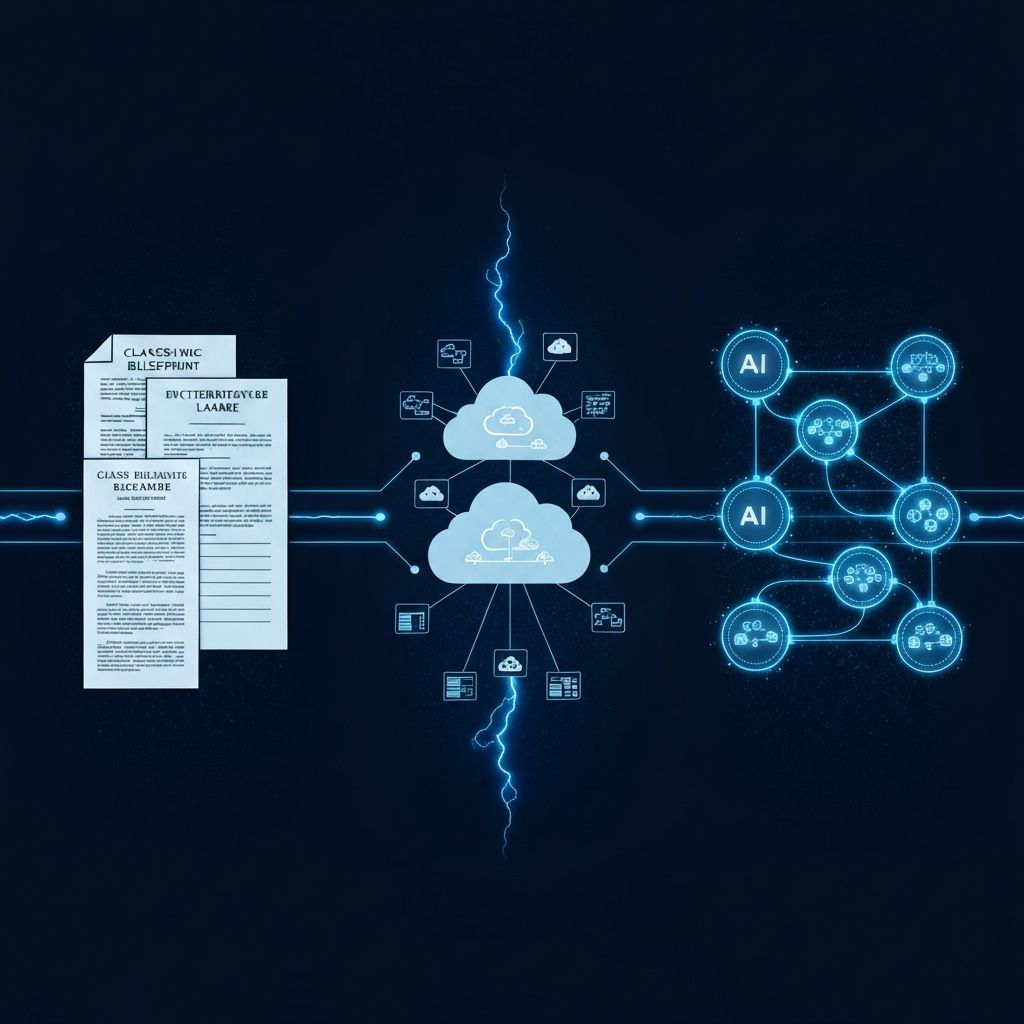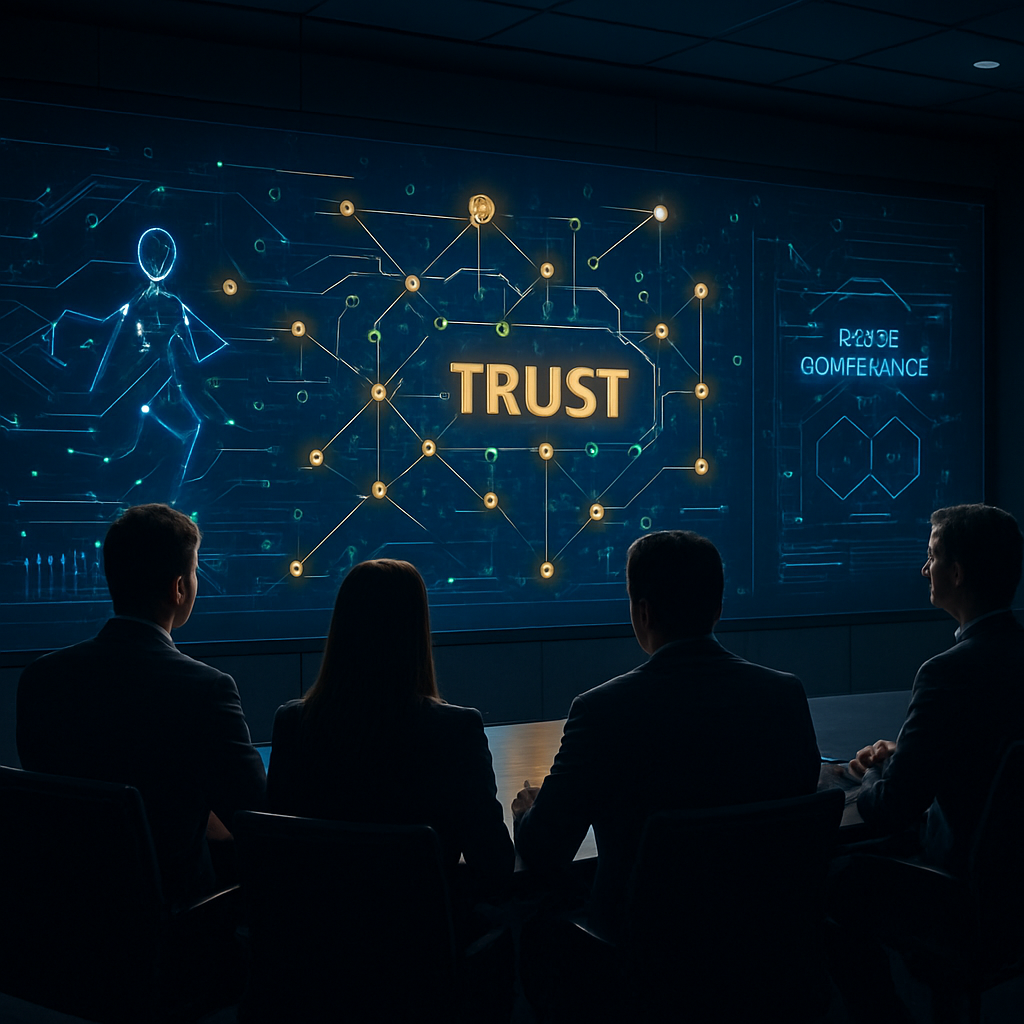
For the last two years, the world has been obsessed with Artificial Intelligence.
Organizations rushed to launch pilots.
Consultants rushed to create AI strategies.
Technology providers rushed to add AI to every product.
Boards rushed to ask management teams for AI roadmaps.
Investors rushed to fund anything remotely associated with AI.
Yet beneath the excitement lies a dangerous assumption.
The Great AI Illusion
Most organizations believe that adopting AI is the challenge.
It is not.
The real challenge is trust.
History shows that transformative technologies do not fail because they are incapable. They fail because society, institutions, regulators, customers, employees, and investors do not trust how they are being used.
Artificial Intelligence is rapidly approaching that moment.
Many organizations proudly announce: "We have deployed AI." "We use generative AI." "We have AI agents."
Yet when executives are asked simple questions, the confidence often disappears:
- Who owns AI governance?
- Who is accountable for AI decisions?
- How are AI risks monitored?
- How are models evaluated?
- How are autonomous agents supervised?
- How are employees trained to use AI responsibly?
- How is regulatory compliance measured?
- How is trust measured?
In many organizations, there are no clear answers.
The result is a dangerous illusion: organizations appear technologically advanced while remaining operationally vulnerable. They possess AI capabilities. But they lack AI trust architecture.
The Pattern Every Transformative Technology Follows
Every major technological revolution follows a predictable pattern:
- Innovation — Breakthrough technology emerges
- Adoption — Organizations begin implementation
- Scale — Widespread deployment accelerates
- Trust becomes the limiting factor
The internet experienced this. Cloud computing experienced this. Digital banking experienced this. E-commerce experienced this.
Artificial Intelligence is no different.
The first wave was about experimentation. The second wave was about implementation. The third wave is happening now — it is about governance. But the fourth wave is already beginning — and it will be about trust.
The organizations that understand this shift will lead the next decade. The organizations that ignore it may find themselves left behind — not because they lack technology, but because they lack credibility.
The Questions That Now Define Trust
Stakeholders increasingly want to know:
Customers: Can we trust your AI?
Employees: How is AI affecting our work?
Investors: How are AI risks being managed?
Regulators: Can you prove responsible AI practices?
Boards: Who is accountable if AI fails?
These questions are no longer hypothetical. They are becoming operational realities that determine market share, talent retention, regulatory standing, and competitive position.
The Agentic Enterprise Is Accelerating the Trust Imperative
A second transformation is occurring simultaneously.
Organizations are moving beyond AI tools to AI agents — digital workers capable of:
- Analyzing data
- Making autonomous recommendations
- Triggering business actions
- Managing workflows
- Coordinating processes
- Interacting with customers
- Learning from interactions
This shift fundamentally changes governance requirements. Traditional governance frameworks were designed for human decision makers, not autonomous systems.
The emergence of agentic organizations creates entirely new governance challenges:
- How many AI agents are operating inside the organization?
- Who supervises them?
- Who audits them?
- What decisions can they make?
- What authority should they have?
- How are they monitored and retired?
- How are they governed?
These questions will define the next generation of enterprise architecture, risk management, and leadership.
The Boardroom Blind Spot
Perhaps the greatest risk exists at the board level.
Many boards now discuss cybersecurity. Most discuss digital transformation. An increasing number discuss AI.
Yet relatively few boards possess structured AI governance oversight mechanisms.
This creates a significant blind spot.
Artificial Intelligence is no longer merely a technology issue. It is becoming a:
- Strategic governance issue
- Risk issue
- Compliance issue
- Reputation issue
- Workforce issue
- Competitive issue
Future boards will likely be evaluated based on their ability to oversee AI responsibly — the same way boards are evaluated today on financial stewardship and risk management.
Organizations that prepare now will gain a significant advantage. Those that delay may find themselves reacting rather than leading.
Trust Is Becoming Infrastructure
For decades, organizations competed primarily on:
- Price
- Scale
- Efficiency
- Innovation
Today a new factor is emerging: Trust.
Trust is becoming a measurable business asset. Organizations with higher levels of AI trust often experience:
- Greater customer loyalty
- Stronger brand resilience
- Lower regulatory exposure
- Improved adoption of new technologies
- Higher investor confidence
- More effective innovation programs
Artificial Intelligence accelerates this trend because AI introduces unprecedented levels of complexity. The average executive cannot inspect a neural network. Customers cannot independently verify model behavior. Employees often cannot understand how recommendations are generated.
As complexity increases, trust becomes the mechanism that enables adoption.
Without trust, AI becomes resistance. With trust, AI becomes acceleration.
The Next Competitive Advantage
The first generation of AI winners adopted AI.
The second generation of winners operationalized AI.
The third generation of winners will govern AI.
The fourth generation of winners will earn trust.
This is the shift many organizations have not yet recognized.
Trust is becoming infrastructure. Trust is becoming strategy. Trust is becoming governance. Trust is becoming competitive advantage.
The future will not belong to the organizations with the most AI. It will belong to the organizations with the most trusted AI.
And that future is arriving faster than most leaders realize.
The question is no longer whether your organization will use AI. The question is whether your stakeholders will trust you when you do. That question may become the defining business challenge of the next decade.
→ Take the AI Trusted Enterprise Readiness Diagnostic — Measure your organization's readiness across AI Governance, Trust, Risk, Compliance, Architecture, and Agentic Transformation.
Leonardo Ramírez is the Founder & Chief Architect of ARCHAI WORLD™. He has 30 years of enterprise architecture experience across banking, healthcare, logistics, technology, and government — three continents, 45+ countries. 500+ transformations delivered. 5,000+ enterprise architects trained. Creator of the Agentic EA Framework. ISO 42001 AI Governance practitioner. TOGAF-certified. Anthropic Partner Network.