Five billion people will watch the 2026 global football tournament. Sixty-four matches. Six hundred and seventy-two hours of the most concentrated human attention in modern commerce.
The brands sponsoring this event will spend $50 billion in activation. And most of them will react to the moments they paid to own.
That is not a creative problem. It is not a talent problem. It is a governance problem.
The Problem Nobody Is Talking About
Here is the actual sequence when a goal is scored at a tournament watched by 5 billion people:
- The moment happens. Social engagement peaks within 90 seconds.
- A human social media manager sees it. Starts drafting. Seeks approval.
- Legal or compliance reviews the copy. Brand manager signs off.
- The post goes live — 23 minutes after the moment that generated it.
- The competitor who moved in 60 seconds already owns the narrative.
The average brand response time to a live sporting moment is 23 minutes. The engagement half-life after peak is 4 minutes. By the time most brands publish, the moment has already made someone else famous.
Why Governance Is the Real Differentiator — Not Speed
The natural instinct is to solve this with automation. Move faster. Remove the human from the loop. Get the content live before the competitor.
That instinct is right about the problem and wrong about the solution.
Ungoverned automation at live-event speed is not an advantage — it is a liability. Without governance, you get speed without control. You get content that violates brand policy at the worst possible moment. You get outputs that your legal team cannot defend. You get an audit trail that does not exist when the regulator asks for it.
The organizations that will dominate the live attention economy in 2026 are not the ones that move fastest. They are the ones that move fast inside controlled boundaries. That is a fundamentally different architecture problem.
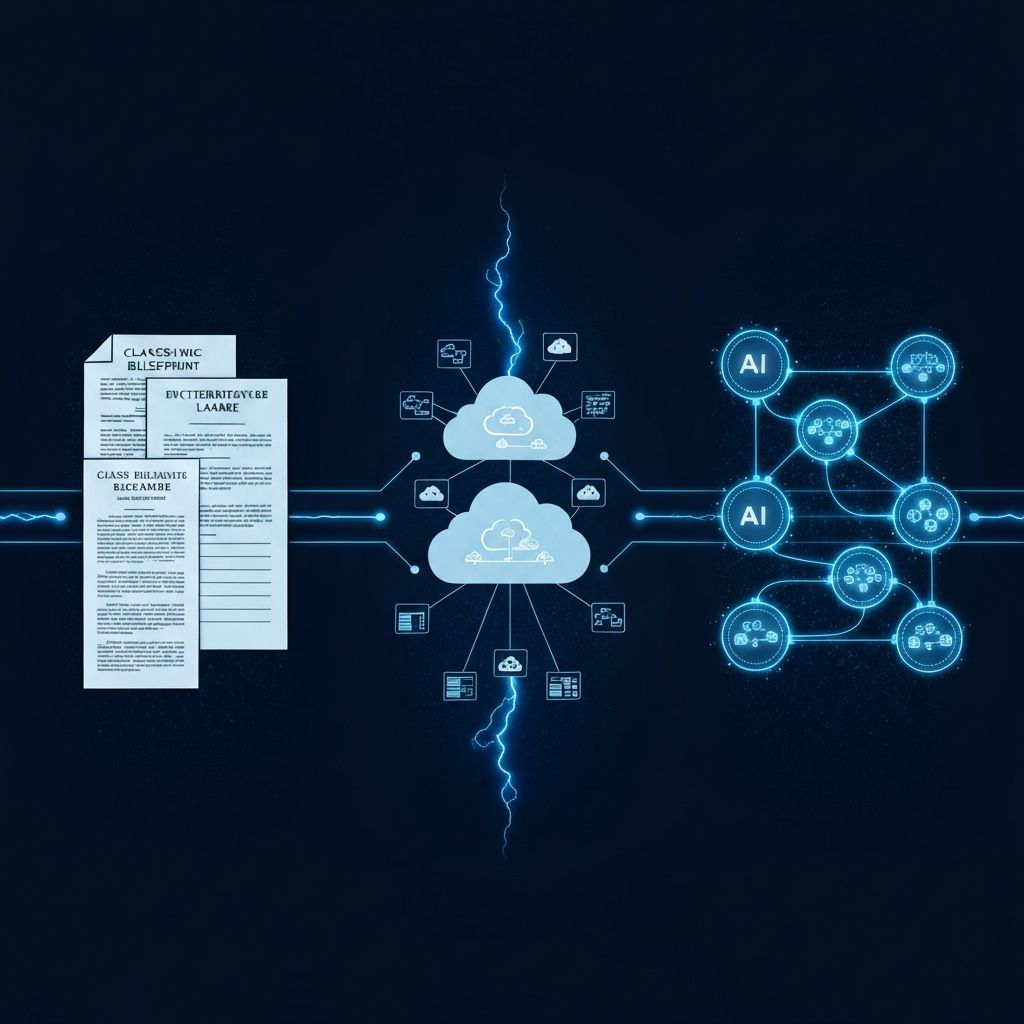
Thirty years of enterprise architecture taught me one thing about AI and automation: every system that operates autonomously must have three non-negotiable layers.
Those three layers are:
- A policy layer that defines what the system is allowed to do before it acts.
- A risk layer that scores every output before it leaves the system.
- An audit layer that records every decision so a human can reconstruct it on demand.
Without these three layers, you do not have an AI system. You have a liability with a publish button.
What We Built — and Why It Took 30 Years to Build It
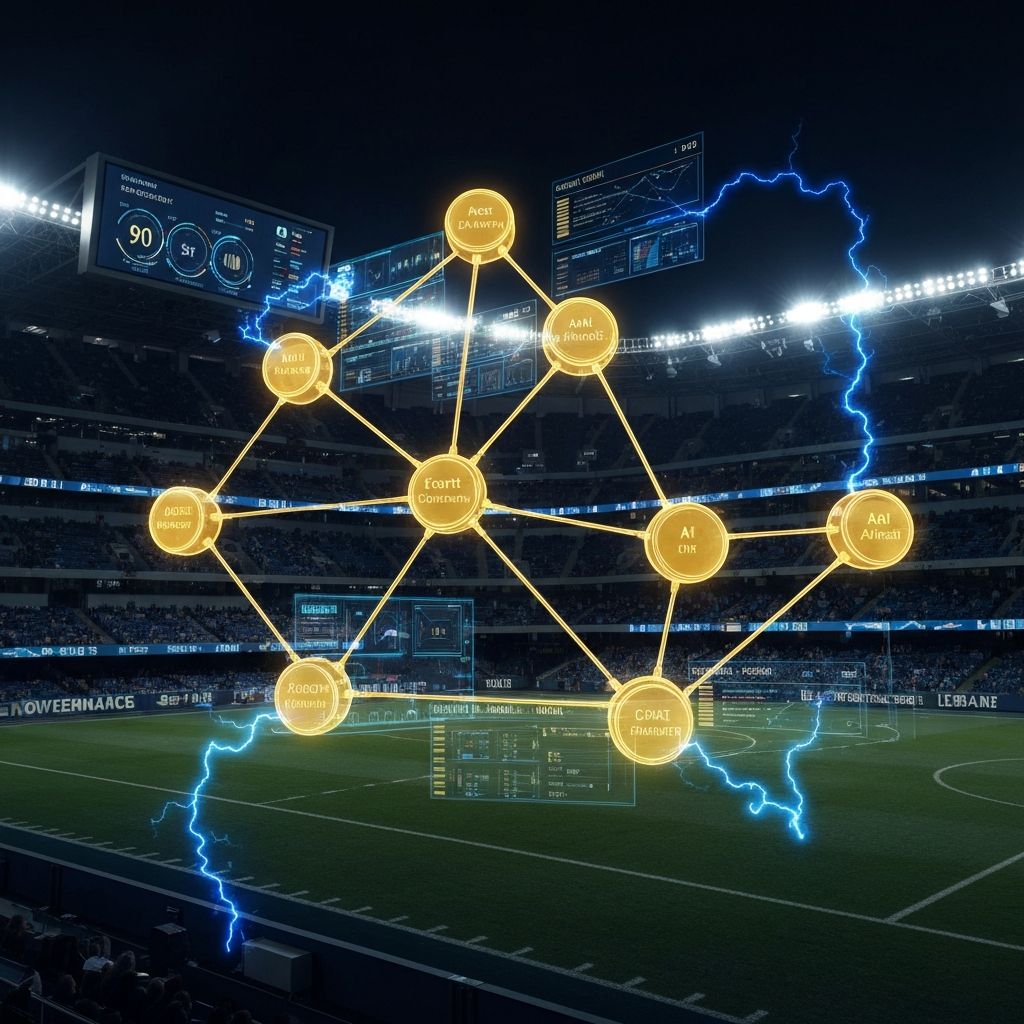
EventPulse OS is an 8-agent governed AI system for live sports brand activation. It produces brand-ready content in under 90 seconds from any live match moment. It operates simultaneously in English, Spanish, and Portuguese. It has a full audit trail for every output. It is ISO 42001-aligned by design, not by retrofit.
The Architecture
| Agent | Function |
|---|---|
| Agent 00 — Orchestrator | Receives live match data. Classifies moment by type and emotional intensity (1–10). Routes tasks to specialist agents with priority queuing. |
| Agent 01 — Viral Content | Transforms the moment into platform-specific content — posts, hooks, scripts, reels angles. |
| Agent 02 — Brand War Room | Validates brand positioning. Competitive angle. CMO-level communication advisory. |
| Agent 03 — Fan Engagement | WhatsApp drops, community updates, newsletter content. Real-time, personalized by market. |
| Agent 04 — Monetization | Maps the moment to revenue paths — lead magnets, offers, consulting triggers. |
| Agent 05 — Sponsor Activation | Detects activation gaps. Builds localized sponsor angles by country and audience segment. |
| Agent 06 — Multilingual Distribution | Simultaneous EN/ES/PT output. Not translated — localized by market intelligence. |
| Agent 07 — Governance Layer | Every output passes here before publication. ISO 42001 policy check. IP independence verification. Risk scoring. Audit trail entry. Human escalation for risk score ≥ 8/10. |
The governance layer is not optional. It is not a setting. It cannot be disabled. Every output from every agent passes through it before it reaches any channel.
That is the architectural choice that took 30 years to be ready to make. When I was building systems for banks, healthcare organizations, and government agencies, I was solving the same problem: how do you give a system enough autonomy to be useful without giving it so much that a single failure becomes a crisis? The answer was always governance architecture. Policy before execution. Risk before output. Audit before close.
EventPulse OS is that architecture applied to the highest-attention environment in modern commerce.
The Market Is Already Validating This Space
I want to be precise about what validation means. It does not mean the market has solved this problem. It means the market has confirmed that this problem is worth solving at scale.
- Teamworks raised $235 million in June 2025 at a valuation above $1 billion. Their positioning: the Operating System for Sports���. Deployed by 100% of NFL teams, 90% of MLB and Premier League clubs.
- ScorePlay raised $20 million total, including a Series A in February 2025, with investment from Giannis Antetokounmpo, Alexis Ohanian, and FIBA.
- The Premier League signed a 5-year strategic partnership with Microsoft in July 2025. Their specific goal: build agentic AI with governance for fan engagement. Result: 20–25% increase in app engagement. 1.8 billion fans in 189 countries receiving personalized intelligence.
- WSC Sports generated more than 8 million video clips with AI in the first half of 2025 — 52% growth year-over-year. LaLiga reported a 70% increase in app sessions from personalized clips.
Here is what the market is telling you: the problem is confirmed, the investment is flowing, the platforms are building — and the 90-second governed output gap remains open. Nobody has closed it.
That is the gap EventPulse OS occupies.
What Enterprise Governance Looks Like in Practice
I want to give you a concrete picture of what governance at live-event speed actually means operationally. Because the word "governance" is used so loosely in the AI industry that it has almost become meaningless.
In EventPulse OS, governance is not a policy document. It is a runtime system. Here is what happens to every output before it publishes:
- IP Independence Check: The system verifies that no output contains protected trademarks, player likenesses, or official tournament marks. This runs before every output on every channel.
- Brand Policy Enforcement: The client's brand voice rules, prohibited language, and message boundaries are loaded as policy vectors. The system cannot produce an output that violates them.
- Emotional Risk Scoring: Each output is scored 1–10 for emotional risk — the probability that the content could generate controversy, backlash, or crisis amplification. Outputs scoring ≥ 8 are flagged for human review before publication.
- Audit Trail Entry: Every output generates an immutable log entry — agent ID, timestamp, output hash, policy check results, risk score, approval status. The entire decision chain is reconstructable on demand.
- Human Override: A human override is available at every step of every flow. The system is designed to escalate to human judgment, not replace it.
When your General Counsel asks "can you show me every piece of content we published during match 47, who approved it, and which policy governed that approval," the answer is: yes, here it is, in three minutes.
That is what enterprise governance looks like at live-event speed. Not slower. Not less powerful. Faster, with accountability built in.
The Governance Gap Is a Business Opportunity
I am going to say something that will seem counterintuitive to people who have watched AI capability grow faster than governance frameworks: the governance gap is not a problem to be solved later. It is a competitive advantage to be built now.
The organizations deploying AI agents today without governance infrastructure are accumulating invisible liability. Every ungoverned decision is a potential audit failure. Every ungoverned output is a potential brand crisis. Every ungoverned action is a potential regulatory violation.
The EU AI Act is not coming. It is here. ISO 42001 is not aspirational. It is the global standard for AI management systems, and regulators in financial services, healthcare, and government are already requiring alignment. Boards are asking CIOs and CTOs to explain exactly which AI systems are making which decisions and under which governance framework.
The executives who built governance infrastructure before the pressure arrived will be the ones standing when others are scrambling. That is not a prediction. It is a pattern I have watched across 500+ enterprise transformations in 30 years.
EventPulse OS is the first public demonstration that governed agentic AI at live-event speed is not a tradeoff. You do not choose between speed and accountability. You build an architecture that delivers both. Because that is what enterprise AI was always supposed to look like.
What This Means for the 2026 Tournament Season
The tournament begins June 11. Forty-seven days from now.
The brands that will own the narrative of this event are not the ones with the biggest budgets. They are the ones with the fastest governed infrastructure. They will be in every conversation, on every platform, in every language, within 90 seconds of every moment that matters — and their compliance team will be able to account for every output.
If you are responsible for brand activation, sponsorship ROI, or content strategy for a brand with any presence in this event — the question is not whether you need this infrastructure. The question is whether you have 47 days left to build it.
EventPulse OS is accepting enterprise applications now. Three tiers: $15,000 (Architect) · $35,000 (Authority) · $75,000 (Enterprise Deployment, done-for-you, 48-hour SLA).
Architecture Alignment Session — 30 minutes with Leonardo Ramírez, no invoice, no pitch deck — is how every engagement begins.
→ archaitects.com/eventpulse-os
Leonardo Ramírez is the Founder & Chief Architect of ARCHAI WORLD™. He has 30 years of enterprise architecture experience across banking, healthcare, logistics, technology, and government — three continents, 45+ countries. 500+ transformations delivered. 5,000+ enterprise architects trained. Creator of the Agentic EA Framework. ISO 42001 AI Governance practitioner. TOGAF-certified. Anthropic Partner Network.
This article represents independent analysis and does not constitute official affiliation with, endorsement by, or sponsorship from any official tournament organization, governing body, or participating national federation.